
Lost but Not Helpless: Smart Wilderness Survival Tips That Can Save Your Life
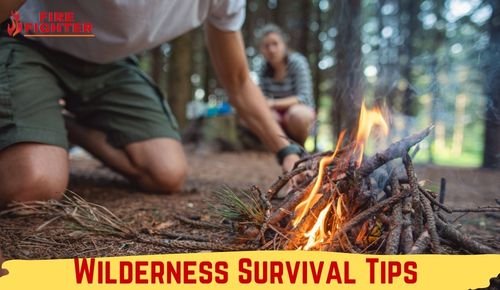
Getting lost in the wild can feel overwhelming, but knowing the right wilderness survival tips can turn fear into control.
I don’t need fancy gear or expert-level training to survive—I just need to stay calm, think clearly, and use basic survival techniques.
Whether I’m hiking, camping, or exploring remote areas, these simple yet powerful outdoor survival tips help me stay safe, find direction, and increase my chances of getting back home.
Contents
- 1 Stay Calm and Control Your Mindset First
- 2 Find or Build Shelter Quickly
- 3 Locate a Clean Water Source
- 4 Start a Fire for Warmth and Safety
- 5 Learn Basic Navigation Techniques
- 6 Signal for Help Effectively
- 7 Know What Foods Are Safe to Eat
- 8 Protect Yourself from Wildlife
- 9 Keep Your Body Temperature Stable
- 10 Use Basic First Aid When Needed
- 11 Conserve Energy and Stay Strategic
- 12 Wilderness Survival Tips for Kids
- 13 Final Thoughts
Stay Calm and Control Your Mindset First
The first thing I focus on is controlling panic because fear can lead to bad decisions. I pause, take deep breaths, and remind myself that survival depends on clear thinking. Instead of rushing, I assess my surroundings and create a plan.
Staying calm helps me conserve energy and avoid mistakes, making this one of the most important survival skills in any situation.
Find or Build Shelter Quickly
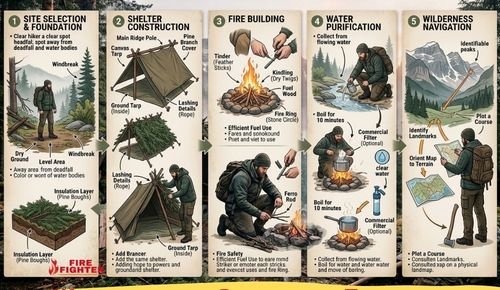
Protecting myself from harsh weather is a top priority when trying to survive in the wild. I look for natural shelters like caves, fallen trees, or dense bushes.
If nothing is available, I build a simple shelter using branches, leaves, or a tarp. Staying dry and warm reduces the risk of hypothermia and improves my chances of long-term survival.
Locate a Clean Water Source
Water is essential for survival, so I make finding it a priority. I search for streams, rivers, or collect rainwater whenever possible.
If the water looks unsafe, I boil it or filter it using cloth or portable filters. These wilderness survival tips help me stay hydrated and prevent dehydration, which can quickly become life-threatening.
Start a Fire for Warmth and Safety
Fire is one of the most powerful tools in any emergency survival guide. It keeps me warm, helps cook food, and can scare away wild animals.
I gather dry wood, leaves, and kindling before starting the fire. Even a small flame can provide comfort and protection, especially during cold nights in the wilderness.
When I’m lost, I avoid wandering aimlessly. I use the sun during the day and stars at night to guide my direction.
If I have a map or compass, I use them carefully to stay on track. These basic survival techniques help me make smart decisions instead of wasting energy moving in the wrong direction.
Signal for Help Effectively
Getting noticed is key when using outdoor survival tips. I create signals using smoke, bright clothing, or reflective objects.
Building three fires in a triangle is a universal distress signal. I also use whistles or loud sounds to attract attention. The goal is to make myself visible so rescuers can locate me quickly.
Know What Foods Are Safe to Eat
Finding food matters, but safety comes first. I avoid unknown plants and berries that could be poisonous.
If necessary, I look for safe options like nuts, insects, or fish. These wilderness survival tips help me maintain energy while avoiding risks that could make my situation worse.
Protect Yourself from Wildlife
Wild animals usually avoid humans, but I stay alert at all times. I keep my distance and never approach or feed them.
If I encounter an animal, I remain calm and avoid sudden movements. Making myself appear larger and backing away slowly helps prevent dangerous encounters in the wild.
Keep Your Body Temperature Stable
Extreme weather conditions can be dangerous, so I focus on regulating my body temperature. I layer clothing to stay warm and use shade to stay cool.
Staying dry is critical because wet clothing can quickly lead to hypothermia. Managing body temperature is a key part of any emergency survival guide.
Use Basic First Aid When Needed
Injuries can happen anytime, so I treat them immediately. I clean cuts, apply pressure to stop bleeding, and rest injured areas. Even small wounds can become serious if ignored. These survival skills help me stay physically capable and prevent minor injuries from becoming major problems.
Conserve Energy and Stay Strategic
I avoid unnecessary movement that drains energy. Instead of walking long distances without direction, I plan carefully.
Resting when needed helps me stay strong for important actions. Smart energy use is one of the most underrated wilderness survival tips and can significantly increase survival time.
Wilderness Survival Tips for Kids
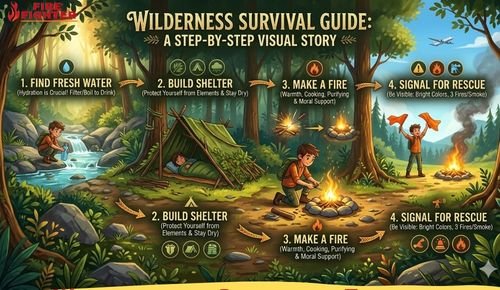
If I ever get lost in the woods, I remind myself to stay calm and think clearly. I look for a safe place to sit, find clean water if I can, and try to build a small shelter to stay warm and dry. I know I should not eat unknown plants and should stay in one place so people can find me. Using simple wilderness survival tips, I can stay safe, save my energy, and wait for help with confidence.
Final Thoughts
Learning wilderness survival tips gives me the confidence to handle unexpected situations with clarity and strength.
Survival is not just about physical ability but also about mindset and smart decisions.
By staying calm, prepared, and focused, I improve my chances to survive in the wild and return safely.
Hi, I m Aaron Smith, a firefighter, and creator of Firefighterline.com, a website that provides top-notch training courses for firefighting organizations. After completing my studies, I quickly rose through the fire service ranks, eventually becoming Captain at one of the busiest fire departments in the state.