
Survival Shelter Ideas: Best Ways to Build Shelter in the Wild
When I’m out in the wilderness, one of the first things I focus on is building shelter. Knowing the right survival shelter ideas helps me stay protected from harsh weather, cold nights, and unexpected dangers. I don’t need advanced tools to survive.
With simple survival shelter building techniques and smart thinking, I can create a safe place that keeps me warm, dry, and secure.
Contents
- 1 Why Shelter Is Your First Priority in Survival
- 2 Choosing the Right Location for Your Shelter
- 3 Lean-To Shelter: Simple and Effective Protection
- 4 Debris Hut: Maximum Warmth with Natural Materials
- 5 Tarp Shelter: Quick Setup with Minimal Effort
- 6 A-Frame Shelter: Balanced Protection on Both Sides
- 7 Natural Shelter: Using What Nature Provides
- 8 Insulating Your Shelter for Warmth
- 9 Keeping Your Shelter Dry in Rain
- 10 Fire Placement Near Your Shelter
- 11 Ventilation and Safety Considerations
- 12 Using Available Tools and Improvised Materials
- 13 Final Thoughts
Why Shelter Is Your First Priority in Survival
When I’m trying to survive in the wild, shelter always comes before food. Exposure to wind, rain, or extreme temperatures can quickly weaken my body.
A well-built outdoor survival shelter helps me maintain body heat, stay dry, and rest properly, which increases my chances of survival.
Choosing the Right Location for Your Shelter
Before I start building, I carefully choose a safe location. I avoid low ground where water can collect and stay away from unstable trees or loose rocks.
I look for natural windbreaks like bushes or hills. Picking the right spot improves the strength and effectiveness of my survival shelter building efforts.
Lean-To Shelter: Simple and Effective Protection
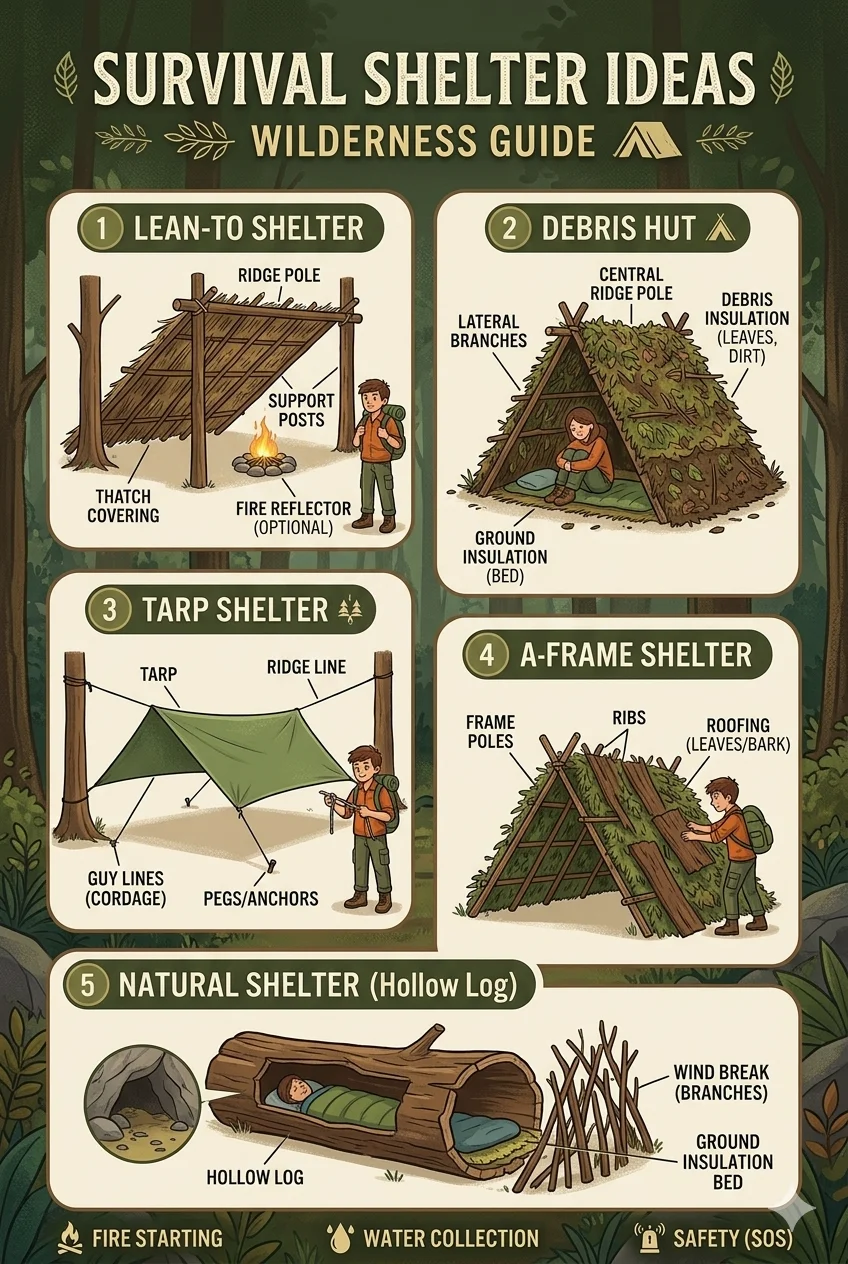
A lean-to is one of the easiest survival shelter ideas I can use. I place a long branch against a tree and layer smaller branches and leaves over it.
This design blocks wind and reflects heat from a fire. It’s quick to build and works well in emergency situations.
Debris Hut: Maximum Warmth with Natural Materials
When I need better insulation, I build a debris hut. I create a frame using sticks and cover it with thick layers of leaves and grass.
This traps heat inside and protects me from cold air. It’s one of the best wilderness shelter tips for staying warm in colder conditions.
Tarp Shelter: Quick Setup with Minimal Effort
If I have a tarp, I can create a shelter very quickly. I tie it between trees and angle it to block wind and rain.
This is one of the most practical emergency shelter ideas because it saves time and energy while offering reliable protection.
A-Frame Shelter: Balanced Protection on Both Sides
An A-frame shelter gives me protection from both sides. I set up a ridge line and place branches evenly on each side to form a triangle shape.
Covering it with natural materials makes it stronger. This outdoor survival shelter works well in changing weather conditions.
Natural Shelter: Using What Nature Provides
Sometimes I use natural shelters like caves, rock overhangs, or hollow trees. These options require little effort and offer quick protection.
I always check for safety before using them. This is one of the smartest survival shelter ideas when time and energy are limited.
Insulating Your Shelter for Warmth
Insulation is key to staying warm in the wild. I add layers of leaves, grass, or moss to trap heat inside the shelter. I also create bedding to stay off the cold ground.
Proper insulation improves comfort and makes my survival shelter building more effective.
Keeping Your Shelter Dry in Rain
Rain can make survival difficult, so I design my shelter to stay dry. I angle the roof so water runs off easily and avoid flat surfaces.
Adding extra layers helps block moisture. Staying dry is one of the most important wilderness shelter tips I follow.
Fire Placement Near Your Shelter
Fire plays an important role in survival. I place my fire at a safe distance in front of the shelter so heat reflects inside. Using rocks or logs helps direct warmth toward me. This setup improves comfort and supports my overall outdoor survival shelter strategy.
Ventilation and Safety Considerations
I make sure my shelter has proper airflow to avoid smoke buildup if I’m using a fire nearby. I also avoid risky areas like flood zones or places with falling debris. These safety steps are essential when applying survival shelter ideas in real situations.
Using Available Tools and Improvised Materials
If I have tools like a knife or rope, building becomes easier. If not, I use natural materials like vines or bark.
Being resourceful helps me build a strong shelter without wasting energy. This is a key part of how to build a shelter in the wild effectively.
Final Thoughts
Learning survival shelter ideas gives me the confidence to handle unexpected situations in the wild.
A strong shelter protects me from the elements, helps conserve energy, and improves my chances of survival.
By using simple materials and smart techniques, I can build a safe and reliable shelter almost anywhere.

Hi, I m Aaron Smith, a firefighter, and creator of Firefighterline.com, a website that provides top-notch training courses for firefighting organizations. After completing my studies, I quickly rose through the fire service ranks, eventually becoming Captain at one of the busiest fire departments in the state.