
How to Survive a War as a Civilian: 15 Smart Safety Strategies That Could Save Your Life
War zones are among the most dangerous environments civilians can face. Explosions, disrupted supplies, communication breakdowns, and constant uncertainty can turn ordinary daily life into a survival challenge.
For civilians who suddenly find themselves in conflict areas, knowledge, preparation, and calm decision-making can dramatically increase the chances of staying safe.
While many people associate war survival with soldiers, the reality is that civilians are often the most vulnerable during armed conflicts.
Families must learn how to protect themselves, find shelter, secure food and water, avoid dangerous areas, and stay informed about changing conditions. Even simple precautions can make a significant difference when resources are limited and safety is uncertain.
This guide explains how to survive a war as a civilian, using clear and practical advice written in simple language.
Each strategy focuses on realistic actions civilians can take to reduce risks and protect themselves during conflict situations.
Contents
- 0.0.1 1. Stay Calm and Think Clearly in Dangerous Situations
- 0.0.2 2. Identify Safe Shelter Immediately
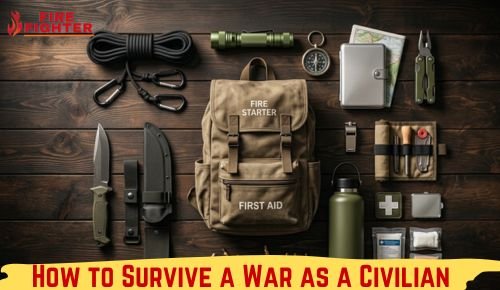
- 0.0.3 3. Prepare an Emergency Survival Kit
- 0.0.4 4. Store Clean Water Whenever Possible
- 0.0.5 5. Secure Enough Food for Several Days
- 0.0.6 6. Stay Informed Through Reliable Sources
- 0.0.7 7. Avoid Windows and Open Areas During Attacks
- 0.0.8 8. Know the Safest Routes in Your Area
- 0.0.9 9. Keep Important Documents Safe
- 0.0.10 10. Stay Low and Move Carefully During Danger
- 0.0.11 11. Communicate With Family and Neighbors
- 0.0.12 12. Conserve Energy and Resources
- 0.0.13 13. Protect Yourself From Fire Hazards
- 0.0.14 14. Maintain Physical and Mental Health
- 0.0.15 15. Be Ready to Evacuate Quickly if Needed
- 1 Final Thoughts
1. Stay Calm and Think Clearly in Dangerous Situations
The first and most important step in surviving any war situation is maintaining a calm and focused mindset. Panic can cause rushed decisions that put you in greater danger. Taking slow breaths and pausing to assess the situation helps your brain process information more clearly.
Imagine hearing distant explosions or emergency sirens in a city neighborhood. Instead of running outside in confusion, you remain inside and observe what is happening. Windows are closed, lights are dimmed, and you begin gathering important supplies. By staying calm, you give yourself time to plan your next steps instead of reacting out of fear.
A calm mindset helps civilians make safer choices about shelter, movement, and communication.
2. Identify Safe Shelter Immediately
During wartime, shelter becomes one of the most important protections against explosions, gunfire, and debris. Solid buildings, basements, underground shelters, and reinforced rooms provide much better protection than open areas.
Picture a sturdy basement room with thick concrete walls and minimal windows. Families gather there with blankets, flashlights, and water containers while explosions echo in the distance. Being inside a protected space dramatically reduces the risk from flying debris and shockwaves.
If no official shelter exists, choosing interior rooms away from windows can also provide additional safety.
3. Prepare an Emergency Survival Kit
A well-prepared emergency kit can help civilians survive during shortages or sudden evacuations. Essential items include clean water, non-perishable food, medical supplies, flashlights, batteries, and important documents.
Imagine a backpack placed near the door containing bottled water, canned food, a flashlight, a radio, and copies of identification papers. When an evacuation warning arrives, the family can quickly grab the bag and leave without scrambling for supplies.
Having supplies ready saves valuable time and reduces stress during emergencies.
4. Store Clean Water Whenever Possible
Water systems are often damaged during war, making safe drinking water difficult to find. Storing clean water ahead of time is one of the smartest survival preparations.
Large containers, bottles, or even clean bathtubs can be filled when warnings of conflict arise. Picture rows of sealed water containers stacked in a cool corner of a basement storage area. These supplies can sustain a household for several days if municipal water stops working.
Clean water is essential for hydration, cooking, and basic hygiene during prolonged crises.
5. Secure Enough Food for Several Days
Food shortages are common during conflicts because supply chains break down and stores close unexpectedly. Keeping a supply of long-lasting foods such as canned goods, rice, dried beans, and energy bars can help families survive temporary disruptions.
Imagine opening a small storage cabinet filled with neatly organized canned vegetables, pasta, and shelf-stable meals. Even simple foods can provide the energy needed to stay healthy during stressful situations.
Rotating stored food regularly ensures the supplies remain fresh and usable.
6. Stay Informed Through Reliable Sources
Information becomes extremely valuable during war. Civilians should follow official news broadcasts, emergency alerts, and government instructions to understand what is happening around them.
Picture a small battery-powered radio sitting on a wooden table inside a shelter room. Even when electricity fails, the radio continues delivering updates about evacuation routes, curfews, and safe areas.
Accurate information helps civilians avoid danger zones and make safer decisions.
7. Avoid Windows and Open Areas During Attacks
Windows can shatter easily during explosions or gunfire, sending dangerous glass fragments flying indoors. Staying away from them during attacks significantly reduces injury risk.
Imagine sitting in a quiet interior hallway with thick walls separating you from the outside world. The room has no windows, and the door remains closed. Even if blasts occur nearby, the chances of injury from shattered glass or debris are much lower.
Moving to protected spaces before or during attacks can prevent serious injuries.
8. Know the Safest Routes in Your Area
Understanding your local geography is important in wartime. Knowing alternative roads, nearby shelters, and evacuation routes can help you move safely if necessary.
Picture studying a printed map of your neighborhood, marking safe roads, hospitals, and emergency shelters. When evacuation orders arrive, you already know the quickest path to safety instead of wasting time searching for directions.
Planning routes in advance can save critical minutes during emergencies.
9. Keep Important Documents Safe
Identification papers, passports, medical records, and insurance documents may become essential during evacuation or relocation.
Imagine placing these papers inside a waterproof folder stored in an emergency bag. When leaving home suddenly, the documents are already organized and protected from rain or damage.
Having these records available helps families access aid services and verify identity during crisis situations.
10. Stay Low and Move Carefully During Danger
If you must move during conflict situations, staying low and moving carefully can reduce visibility and exposure to danger.
Picture walking quietly along a wall while keeping your body low to the ground. Buildings and barriers provide cover while you move toward a safer location.
Using available cover and avoiding open streets can reduce the chances of being seen or injured.
11. Communicate With Family and Neighbors
Strong communication helps communities survive difficult situations. Families should create meeting plans and communication methods if they become separated.
Imagine neighbors gathering briefly in a courtyard to share information about nearby shelters and supply locations. This cooperation helps everyone stay informed and prepared.
Working together increases safety and emotional support during stressful times.
12. Conserve Energy and Resources
Supplies may be limited during long conflicts. Using resources carefully ensures they last longer.
Picture carefully rationing bottled water and food supplies while cooking simple meals that use minimal fuel. Lights are only turned on when necessary to preserve batteries.
Careful resource management helps families survive longer until help arrives.
13. Protect Yourself From Fire Hazards
Explosions and damaged infrastructure can start fires in buildings or neighborhoods. Being prepared to respond quickly is important.
Imagine smoke beginning to fill a hallway after nearby damage. You quickly cover your nose with cloth, stay low where the air is clearer, and move toward a safe exit.
Knowing basic fire safety can prevent serious injuries in chaotic environments.
14. Maintain Physical and Mental Health
War situations place enormous stress on civilians. Taking care of both physical and mental health helps people stay strong and focused.
Imagine families sharing meals together inside a shelter room while speaking calmly and supporting each other. Even small routines such as resting, stretching, or reading help maintain emotional balance.
Mental resilience helps civilians cope with uncertainty and fear.
15. Be Ready to Evacuate Quickly if Needed
Sometimes the safest option is leaving the area entirely. Having a plan for evacuation can prevent confusion during urgent situations.
Picture a family stepping outside with backpacks already prepared, locking their door, and calmly heading toward a designated evacuation route. Because they planned ahead, they move quickly and safely.
Being ready to leave at a moment’s notice can protect lives when conditions worsen.
Final Thoughts
War is one of the most challenging situations civilians can face, but preparation and awareness can greatly improve safety.
Staying calm, securing shelter, storing supplies, and following reliable information are essential survival strategies during conflict.
Although no plan guarantees complete safety, learning how to respond to dangerous situations helps civilians make better decisions and protect their families. By understanding these survival principles and preparing ahead of time, people can increase their chances of staying safe even during the most difficult circumstances.
Hi, I m Aaron Smith, a firefighter, and creator of Firefighterline.com, a website that provides top-notch training courses for firefighting organizations. After completing my studies, I quickly rose through the fire service ranks, eventually becoming Captain at one of the busiest fire departments in the state.