
Essential Survival Skills That Can Save Your Life in Any Situation
When I think about survival, I don’t just picture extreme wilderness scenarios—I think about being ready for real-life emergencies at any moment.
From getting lost outdoors to facing unexpected disasters, essential survival skills give me confidence, control, and the ability to act fast. Instead of panicking, I rely on simple, practical steps that help me stay safe and make smart decisions.
This guide explains each survival skill in a clear and detailed way so I can visualize every action and apply it when it matters most.
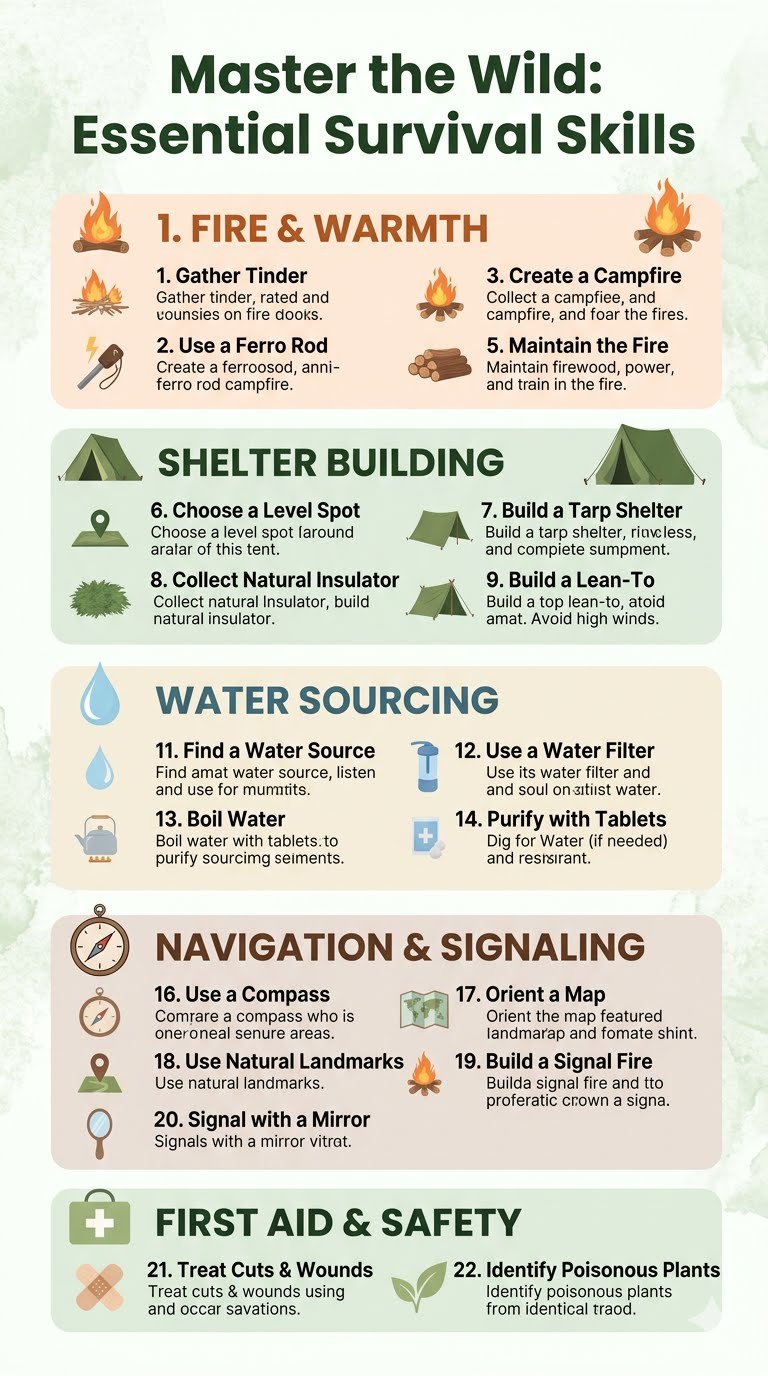
Contents
- 1 Stay Calm and Take Control of Your Mind
- 2 Build a Shelter That Actually Protects You
- 3 Start a Fire Even Without Tools
- 4 Find Water and Make It Safe to Drink
- 5 Navigate Without Getting Lost Further
- 6 Signal for Help So You Get Found Faster
- 7 Identify Food That Won’t Harm You
- 8 Turn Nature Into Useful Tools
- 9 Protect Yourself from Harsh Weather
- 10 Conserve Energy Like It’s a Lifeline
- 11 Strengthen Your Mental Resilience
- 12 Handle Injuries with Basic First Aid
- 13 Stay Constantly Aware of Your Surroundings
- 14 Stay Warm and Safe Through the Night
- 15 Gather and Store Resources Efficiently
- 16 Avoid Risks That Could Injure You
- 17 Create a Raised Sleeping Space
- 18 Adapt Quickly to Changing Situations
- 19 Maintain Cleanliness and Hygiene
- 20 Stay Alert and Avoid Threats
- 21 Use Daylight to Your Advantage
- 22 Know When to Stay Put or Move
- 23 Final thoughts
Stay Calm and Take Control of Your Mind
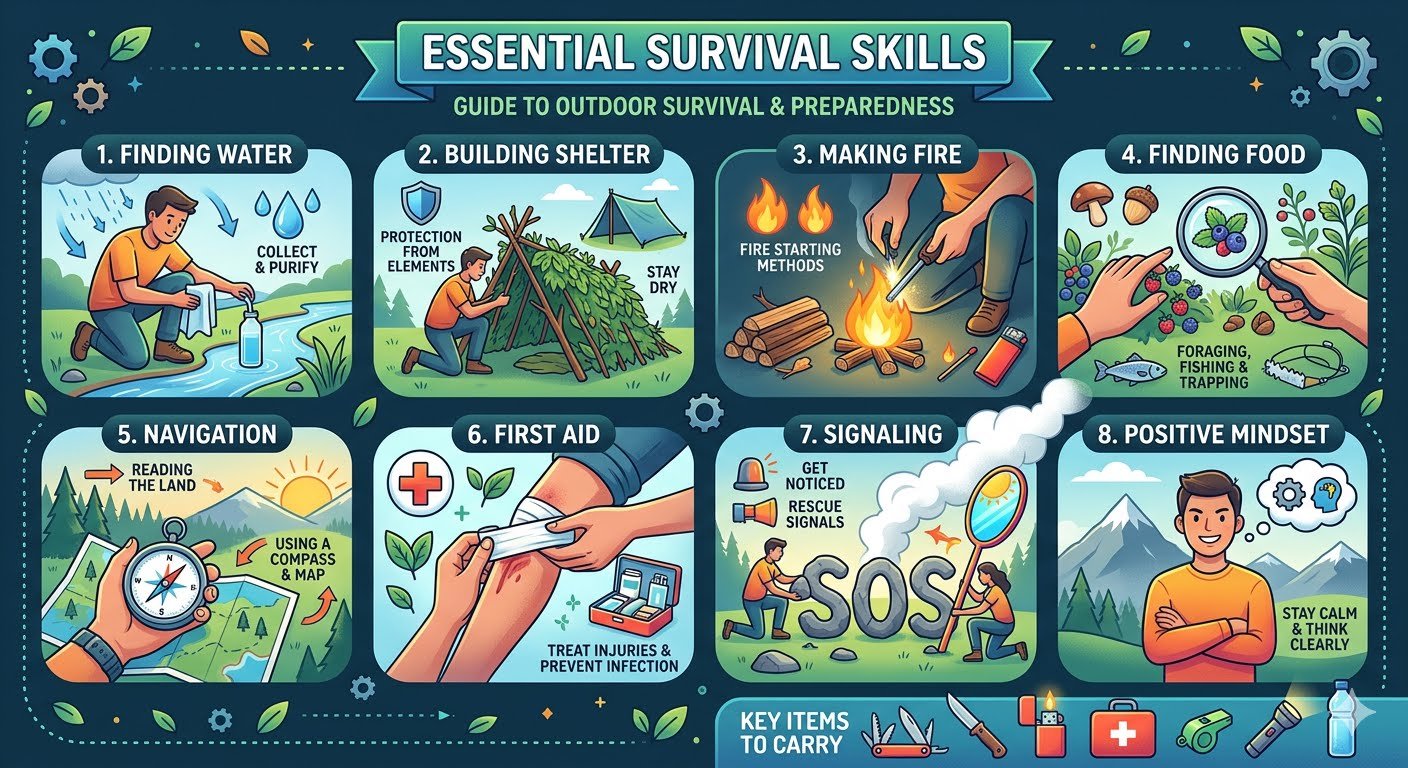
The first and most powerful survival skill I rely on is staying calm. I pause, take slow breaths, and allow my thoughts to settle instead of reacting instantly. I observe my surroundings carefully—the sounds, the terrain, and any immediate threats.
This mental control helps me avoid panic-driven mistakes and allows me to think logically, making every decision more effective and purposeful.
Build a Shelter That Actually Protects You
I don’t rush into building just any shelter—I choose a safe location first. I look for slightly elevated ground to avoid flooding and use a strong base like a fallen tree or rock formation.
I carefully layer branches, leaves, and debris to block wind and rain, then insulate the inside with soft grass or dry leaves. This creates a warm, protective space that shields me from harsh weather.
Start a Fire Even Without Tools
Fire is essential for warmth, safety, and survival. I gather materials step by step, starting with fine tinder like dry grass, then adding small twigs and larger wood pieces.
I structure it so air can flow through easily, helping the fire grow. Once lit, I maintain it by adding fuel gradually, ensuring I have a steady source of heat and light.
Find Water and Make It Safe to Drink
I prioritize finding water quickly because dehydration can become dangerous fast. I listen for running water and move toward streams or rivers. If I can’t find a source, I collect rainwater using leaves or containers. Before drinking, I boil the water thoroughly to remove harmful bacteria, making it safe for consumption.
Instead of wandering aimlessly, I choose a clear direction based on the sun or visible landmarks.
I mark my path by breaking branches or placing stones so I can track where I’ve been. This prevents me from walking in circles and helps me stay oriented while moving toward a safer area.
Signal for Help So You Get Found Faster
I focus on making myself visible. I create large ground signals using rocks or logs that stand out clearly against the environment.
I also use fire to produce smoke during the day, making it thick and noticeable. These signals increase my chances of being spotted by rescuers quickly.
Identify Food That Won’t Harm You
I only eat food that I recognize as safe. I carefully inspect plants, berries, and nuts, avoiding anything unfamiliar or unusual.
If needed, I consider insects as a reliable protein source. Eating safely helps me maintain energy without risking illness.
Turn Nature Into Useful Tools
I use natural resources creatively. Strong sticks become tools or weapons, sharp stones act as cutting tools, and vines serve as ropes. By using what’s around me, I can build, fix, and improve my survival setup efficiently.
Protect Yourself from Harsh Weather
I adjust my actions based on the weather. In cold conditions, I layer up and use insulation to trap heat.
In hot conditions, I stay in shaded areas and limit movement. Protecting my body from extreme temperatures helps me stay stable and avoid exhaustion.
Conserve Energy Like It’s a Lifeline
I treat my energy as a limited resource. I avoid unnecessary movement and focus only on essential tasks like gathering water or improving shelter. By pacing myself, I stay strong and capable for longer periods.
Strengthen Your Mental Resilience
I keep my mindset positive and focused. I set small, achievable goals and remind myself that survival is possible. This mental strength helps me stay motivated and prevents fear from taking control.
Handle Injuries with Basic First Aid
I treat injuries immediately to prevent complications. I clean wounds, stop bleeding, and protect them using available materials. Taking care of injuries ensures I can continue functioning effectively.
Stay Constantly Aware of Your Surroundings
I remain alert at all times. I listen for unusual sounds, watch for movement, and observe environmental changes. This awareness helps me avoid danger and identify useful resources quickly.
Stay Warm and Safe Through the Night
Before night falls, I prepare my shelter and fire. I insulate my sleeping area and keep everything I need within reach. This preparation keeps me safe, warm, and comfortable during the night.
Gather and Store Resources Efficiently
I collect extra firewood, water, and materials during the day. I store them close to my shelter so I’m always prepared. This reduces stress and effort when conditions become difficult.
Avoid Risks That Could Injure You
I move carefully and avoid dangerous areas like steep slopes or unstable ground. I test each step before committing. Preventing injury is critical because even minor injuries can become serious in survival situations.
Create a Raised Sleeping Space
I build a bed using branches and layer it with leaves or grass. This keeps me off the cold ground, improves comfort, and helps me retain body heat while resting.
Adapt Quickly to Changing Situations
I stay flexible and adjust my plans based on changing conditions. If the weather shifts or resources become scarce, I rethink my approach and act accordingly to stay safe.
Maintain Cleanliness and Hygiene
I keep my hands, tools, and surroundings clean as much as possible. This reduces the risk of infection and helps me stay physically and mentally healthy.
Stay Alert and Avoid Threats
I remain cautious and aware of potential dangers like wild animals or unstable environments. I avoid unnecessary risks and focus on staying safe at all times.
Use Daylight to Your Advantage
I complete important tasks during daylight hours when visibility is clear. I plan ahead so I’m fully prepared before darkness arrives, reducing risk and stress.
Know When to Stay Put or Move
I carefully evaluate my situation before deciding to move. If rescue is likely, I stay in one place and make myself visible with signals and fire.
If I choose to move, I do so with a clear direction and purpose, ensuring every step increases my chances of survival.
Final thoughts
Essential survival skills are not about being fearless—they’re about being prepared, aware, and confident in every decision I make.
I focus on using my surroundings wisely, staying mentally strong, and acting with purpose.
With these skills, I give myself the best possible chance to stay safe and overcome any situation.
Hi, I m Aaron Smith, a firefighter, and creator of Firefighterline.com, a website that provides top-notch training courses for firefighting organizations. After completing my studies, I quickly rose through the fire service ranks, eventually becoming Captain at one of the busiest fire departments in the state.