
Life-Saving Disaster Survival Tips to Protect Your Family and Stay in Control
Disasters can strike at any moment, often without warning, leaving little time to react. From sudden earthquakes and violent storms to floods and extended power outages, I’ve learned that preparation is the key to survival.
When I take the time to plan ahead, I reduce fear and increase my ability to act with confidence.
These survival tips are not just ideas—they are practical actions I rely on to keep myself and my family safe during emergencies.
Contents
- 0.1 1. Stay Calm and Think Clearly Under Pressure
- 0.2 2. Build a Reliable Emergency Kit
- 0.3 3. Store Enough Clean Drinking Water
- 0.4 4. Keep Non-Perishable Food Ready
- 0.5 5. Create a Family Communication Plan
- 0.6 6. Know Your Local Emergency Exits and Routes
- 0.7 7. Learn Basic First Aid Skills
- 0.8 8. Secure Your Home Before Disaster Hits
- 0.9 9. Keep a Backup Power Source
- 0.10 10. Stay Updated with Emergency Alerts
- 0.11 11. Pack Essential Documents Safely
- 0.12 12. Dress for Safety and Protection
- 0.13 13. Learn How to Shut Off Utilities
- 0.14 14. Prepare for Different Types of Disasters
- 0.15 15. Keep Emergency Cash on Hand
- 0.16 16. Maintain Personal Hygiene Supplies
- 0.17 17. Protect Yourself from Contaminated Water or Food
- 0.18 18. Have a Plan for Pets
- 0.19 19. Stay Indoors When It’s Safer
- 0.20 20. Be Ready to Evacuate Quickly
- 0.21 21. Help Others When Possible
- 0.22 22. Keep a Positive and Strong Mindset
- 1 Final Thoughts
1. Stay Calm and Think Clearly Under Pressure
The first thing I focus on during any disaster is staying calm, even when everything around me feels chaotic.
Panic can quickly take over and lead to poor decisions, which can put me in greater danger. Instead, I take a moment to slow my breathing, observe my surroundings, and think logically about what is happening.
This pause allows me to make smarter choices, whether it’s finding a safe exit, helping others, or protecting myself from immediate harm.
2. Build a Reliable Emergency Kit
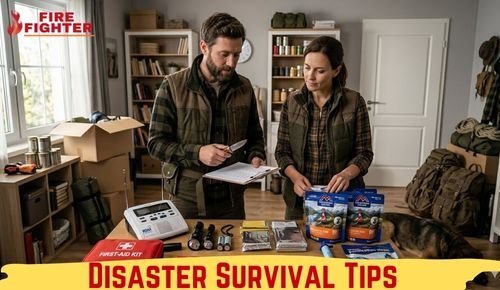
I make it a priority to prepare a well-organized emergency kit that I can grab instantly when needed.
This kit acts as my lifeline during the first critical hours of a disaster. I include essentials like water, food, a flashlight, batteries, first aid supplies, and important documents.
By keeping everything in one place, I avoid wasting time searching for items when urgency is high. Having this kit ready gives me peace of mind and ensures I’m not caught unprepared.
3. Store Enough Clean Drinking Water
Water is one of the most important resources during any emergency, and I never take it for granted. I store enough clean drinking water to last several days, usually at least one gallon per person per day.
I also keep backup options like water purification tablets or portable filters in case my stored supply runs out. Staying hydrated is essential for maintaining energy, clear thinking, and overall health during stressful situations.
4. Keep Non-Perishable Food Ready
I always make sure I have a supply of non-perishable food that can last for days without refrigeration or cooking. In emergencies, access to fresh food may be limited, so I rely on items like canned goods, protein bars, and dried foods.
These options are easy to store, simple to carry, and provide the energy I need to stay active and alert. Planning my food supply carefully helps me avoid hunger and maintain strength during difficult times.
5. Create a Family Communication Plan
One of my biggest concerns during a disaster is getting separated from my family, which is why I create a clear communication plan in advance.
I make sure everyone knows where to meet, how to contact each other, and what steps to take if communication lines are down. Having this plan reduces confusion and fear, allowing us to reconnect quickly and safely even in chaotic situations.
6. Know Your Local Emergency Exits and Routes
I take time to familiarize myself with evacuation routes and safe locations in my area before any disaster occurs. This preparation helps me act quickly without hesitation when an emergency arises.
I identify multiple escape routes, not just one, in case roads are blocked or unsafe. Knowing where to go and how to get there can save valuable time and significantly increase my chances of staying safe.
7. Learn Basic First Aid Skills
I believe that basic first aid knowledge is an essential survival skill that everyone should have. During a disaster, medical help may not be immediately available, so I make sure I know how to treat common injuries like cuts, burns, and sprains.
This knowledge allows me to respond quickly and prevent small injuries from becoming serious. Being able to care for myself and others in these situations can make a life-saving difference.
8. Secure Your Home Before Disaster Hits
Preparing my home in advance is one of the most effective ways I reduce risk during disasters. I secure heavy furniture, reinforce windows, and keep emergency tools within reach.
These small actions help prevent injuries and minimize damage when disaster strikes. A well-prepared home provides a safer environment and gives me more control over the situation.
9. Keep a Backup Power Source
Power outages are common during emergencies, and I make sure I’m ready for them. I keep power banks fully charged, store extra batteries, and have reliable light sources available.
This allows me to stay connected, access important information, and move safely in the dark. Having backup power also helps me maintain a sense of normalcy during stressful times.
10. Stay Updated with Emergency Alerts
Staying informed is critical during any disaster, and I make it a habit to monitor emergency alerts closely.
I use my phone, radio, or local news to stay updated on the situation. This information helps me understand what’s happening and what actions I should take next.
Being aware of changing conditions allows me to respond quickly and avoid unnecessary risks.
11. Pack Essential Documents Safely
I always keep copies of my important documents in a secure, waterproof folder. These include identification, insurance papers, and medical records.
In the aftermath of a disaster, having access to these documents makes recovery much easier. It saves time, reduces stress, and ensures I can handle important matters without additional complications.
12. Dress for Safety and Protection
What I wear during a disaster can have a big impact on my safety. I choose sturdy shoes, long sleeves, and protective clothing to guard against debris, sharp objects, and harsh weather. Proper clothing reduces the risk of injury and helps me move more confidently in difficult conditions.
13. Learn How to Shut Off Utilities
I make sure I know how to shut off gas, water, and electricity in my home before an emergency happens.
This knowledge can prevent fires, leaks, and further damage after a disaster. Acting quickly to turn off utilities can protect my home and reduce the chances of additional hazards.
14. Prepare for Different Types of Disasters
Not all disasters are the same, so I adjust my preparation based on the risks in my area.
Whether it’s floods, earthquakes, or storms, each situation requires a slightly different approach.
By preparing for multiple scenarios, I ensure that I’m not caught off guard and can respond effectively no matter what happens.
15. Keep Emergency Cash on Hand
In many emergencies, digital payment systems may stop working, which is why I always keep some cash available.
Having small bills allows me to buy essential items like food, water, or fuel when needed. This simple step gives me more flexibility and independence during uncertain times.
16. Maintain Personal Hygiene Supplies
Even during disasters, maintaining hygiene is important for my health and comfort. I include items like soap, wipes, and hand sanitizer in my emergency kit.
Staying clean helps prevent infections and keeps me feeling more in control, even in difficult conditions.
17. Protect Yourself from Contaminated Water or Food
I stay cautious about what I eat and drink during emergencies. Contaminated water or spoiled food can cause serious illness, which can make a bad situation even worse.
I always use safe sources and check food carefully before consuming it. Protecting my health is a top priority.
18. Have a Plan for Pets
If I have pets, I make sure they are included in my disaster plan. I prepare food, water, and carriers so they can be transported safely.
Taking care of my pets not only keeps them safe but also reduces stress for me during emergencies.
19. Stay Indoors When It’s Safer
Sometimes, the safest option is to stay inside rather than evacuate. In these situations, I move to a secure area like an interior room or basement, away from windows and external walls. Knowing when to stay put helps me avoid unnecessary risks and stay protected.
20. Be Ready to Evacuate Quickly
When evacuation becomes necessary, I act quickly and without hesitation. I keep my emergency kit near the exit and ensure my vehicle is ready with enough fuel.
Leaving early helps me avoid traffic, danger zones, and last-minute confusion.
21. Help Others When Possible
If it’s safe to do so, I try to help others around me during a disaster. Checking on neighbors or offering assistance can make a big difference.
Working together creates a stronger, more supportive community and improves everyone’s chances of staying safe.
22. Keep a Positive and Strong Mindset
Finally, I focus on maintaining a strong and positive mindset. Disasters are temporary, and staying mentally strong helps me think clearly and act wisely.
By reminding myself that I am prepared, I can face challenges with confidence and resilience.
Final Thoughts
Disaster survival is not about fear—it’s about being prepared, staying aware, and acting with confidence. I focus on building strong habits, organizing essential supplies, and keeping a clear mind.
When I’m ready, I don’t panic—I take control. And that preparation can make all the difference in keeping myself and my family safe.
Hi, I m Aaron Smith, a firefighter, and creator of Firefighterline.com, a website that provides top-notch training courses for firefighting organizations. After completing my studies, I quickly rose through the fire service ranks, eventually becoming Captain at one of the busiest fire departments in the state.