
13 Survival Tips for Any Situation That Could Save Your Life in the Wild or During Emergencies
When emergencies strike, the difference between panic and survival often comes down to preparation and knowledge.
Survival skills are not just for extreme adventurers or wilderness explorers—they are useful for anyone facing unexpected situations like natural disasters, getting lost outdoors, or sudden emergencies.
Learning simple survival techniques can help you stay calm, protect yourself, and make smart decisions when it matters most.
In this guide, you’ll find 13 practical survival tips for any situation. Each tip focuses on essential actions that help you stay safe, think clearly, and increase your chances of getting through a difficult situation.
The advice is written in simple, easy-to-understand language, making it useful for beginners as well as outdoor enthusiasts.
Contents
- 0.0.1. 1. Stay Calm and Control Panic
- 0.0.2. 2. Secure a Reliable Water Source
- 0.0.3. 3. Build a Temporary Shelter
- 0.0.4. 4. Learn How to Start a Fire
- 0.0.5. 5. Prioritize Finding Safe Food
- 0.0.6. 6. Carry Essential Survival Tools
- 0.0.7. 7. Learn Basic First Aid Skills
- 0.0.8. 8. Know How to Signal for Help
- 0.0.9. 9. Navigate Without Technology
- 0.0.10. 10. Protect Yourself From Extreme Weather
- 0.0.11. 11. Conserve Energy and Resources
- 0.0.12. 12. Stay Visible and Easy to Locate
- 0.0.13. 13. Maintain a Positive Survival Mindset
- 0.1. Final Thoughts
- 1. 13 Survival Tips for Any Situation: Practical Skills That Could Save Your Life
- 1.1. 1. Stay Calm and Control Your Fear
- 1.2. 2. Follow the STOP Method When You’re Lost
- 1.3. 3. Secure a Clean Water Source Immediately
- 1.4. 4. Build a Shelter to Protect Your Body
- 1.5. 5. Learn to Start and Maintain a Fire
- 1.6. 6. Know Basic First Aid for Emergencies
- 1.7. 7. Signal for Help So Rescuers Can Find You
- 1.8. 8. Prepare for Emergencies Before They Happen
- 1.9. 9. Protect Yourself From Heat and Cold
- 1.10. 10. Know What to Do During a House Fire
- 1.11. 11. Handle Choking Emergencies Quickly
- 1.12. 12. Be Alert and Aware of Your Surroundings
- 1.13. 13. Maintain a Strong Survival Mindset
- 2. Final Thoughts
- 3. 13 Survival Tips for Any Situation Everyone Should Know (Simple Skills That Can Save Your Life)
- 3.0.1. 1. Stay Calm and Slow Down Your Thinking
- 3.0.2. 2. Understand Your Surroundings First
- 3.0.3. 3. Find a Reliable Source of Water
- 3.0.4. 4. Build a Shelter to Protect Yourself
- 3.0.5. 5. Learn How to Start a Fire
- 3.0.6. 6. Conserve Your Energy
- 3.0.7. 7. Make Yourself Easy to Find
- 3.0.8. 8. Keep Basic Survival Tools With You
- 3.0.9. 9. Learn Basic First Aid Skills
- 3.0.10. 10. Stay Warm or Cool Depending on the Weather
- 3.0.11. 11. Use Natural Navigation Clues
- 3.0.12. 12. Think Creatively With Available Resources
- 3.0.13. 13. Keep a Positive Survival Mindset
- 4. Final Thoughts
1. Stay Calm and Control Panic
The first and most important survival skill is staying calm under pressure. Panic can lead to rushed decisions that make a dangerous situation worse. Taking slow, deep breaths helps you regain control of your thoughts and focus on what needs to be done.
Picture someone stranded in a forest or stuck during a natural disaster. Instead of running around aimlessly, they pause, breathe slowly, and observe their surroundings. This calm mindset allows them to think logically, identify available resources, and create a simple plan to stay safe.
2. Secure a Reliable Water Source
Water is the most critical survival need after air and shelter. The human body can survive only a few days without drinking water, so finding or collecting it quickly is essential in any survival situation.
Look for natural sources such as streams, rainwater, or morning dew on plants. If possible, purify the water by boiling it or using a portable water filter. Imagine collecting rainwater in a container or boiling water over a small fire in a metal cup—simple actions that greatly reduce the risk of dehydration and illness.
3. Build a Temporary Shelter
Exposure to harsh weather can become life-threatening quickly. A simple shelter protects you from rain, wind, cold temperatures, and direct sunlight, helping your body maintain its energy.
A basic shelter can be built using branches, leaves, tarps, or fallen logs. For example, lean long branches against a tree trunk to create a slanted roof, then cover it with thick leaves for insulation. Even a small shelter like this can keep you warm and dry during an unexpected night outdoors.
4. Learn How to Start a Fire
Fire is one of the most valuable survival tools. It provides warmth, helps cook food, purifies water, and can be used as a signal for rescuers.
You can start a fire using matches, a lighter, or even natural methods like a fire striker or friction techniques. Dry leaves, small twigs, and bark work well as tinder. Imagine a small glowing fire surrounded by stones, producing warmth and light during a cold evening in the wilderness.
5. Prioritize Finding Safe Food
While humans can survive weeks without food, eating properly helps maintain energy, focus, and strength. In survival situations, food sources may include edible plants, nuts, insects, or fish.
It’s important to only consume plants you can clearly identify as safe. For example, gathering wild berries or catching fish from a stream can provide essential calories. Even small food sources can help maintain energy while waiting for rescue.
6. Carry Essential Survival Tools
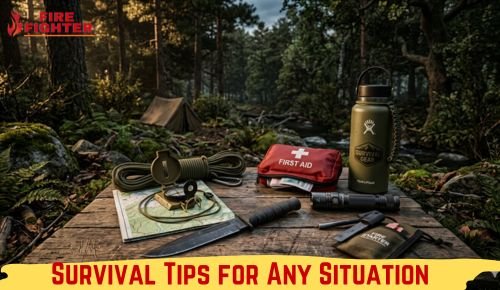
A small survival kit can make a huge difference in emergencies. Essential items include a knife, flashlight, whistle, fire starter, first aid supplies, and a water container.
Imagine opening a compact backpack containing these tools during an emergency. The knife helps cut branches for shelter, the flashlight provides light at night, and the whistle allows you to signal rescuers. These simple tools significantly improve your ability to survive unexpected situations.
7. Learn Basic First Aid Skills
Injuries can quickly turn serious if they are not treated properly. Knowing basic first aid techniques allows you to manage cuts, burns, or sprains until help arrives.
For example, cleaning a wound with clean water, applying pressure to stop bleeding, and wrapping it with a bandage can prevent infection. Even simple knowledge like immobilizing a sprained ankle using sticks and cloth can help prevent further injury.
8. Know How to Signal for Help
Rescue teams often rely on visible or audible signals to locate people in distress. Learning how to signal for help greatly increases the chances of being found.
You can create signals by lighting a smoky fire, using a whistle, reflecting sunlight with a mirror, or arranging rocks into large visible shapes. Imagine a large “SOS” symbol made from branches on open ground—something that can easily be spotted from the air.
9. Navigate Without Technology
Modern tools like GPS and smartphones are helpful, but they may fail in remote areas or during disasters. Knowing how to navigate using natural clues is an important survival skill.
The position of the sun, the direction of flowing water, and landmarks such as mountains or large trees can guide your movement. For example, rivers often lead to populated areas, and following one downstream may eventually lead to help.
10. Protect Yourself From Extreme Weather
Weather conditions can change rapidly in many environments. Preparing for heat, cold, rain, or strong winds helps prevent dangerous situations like hypothermia or heat exhaustion.
Wearing layered clothing, staying dry, and finding shade during hot conditions are simple but effective strategies. Imagine resting under a shaded tree during midday heat or wrapping yourself in dry clothing near a fire to maintain body warmth.
11. Conserve Energy and Resources
In survival situations, every action uses valuable energy. Moving too much or wasting supplies can make survival more difficult.
Instead of wandering aimlessly, focus on short, purposeful tasks such as gathering firewood, collecting water, or improving your shelter. Resting regularly and staying organized helps conserve energy while maintaining strength for important tasks.
12. Stay Visible and Easy to Locate
Many people make the mistake of moving too far from their last known location. Staying in one visible area can help rescuers locate you faster.
Choose an open space where smoke from a fire or bright clothing can easily be seen. For example, spreading a brightly colored jacket on the ground or hanging it from a tree branch can make you more noticeable from a distance.
13. Maintain a Positive Survival Mindset
Survival is not only physical—it is also mental. A strong and positive mindset can help you endure difficult situations longer than you might expect.
Imagine someone stranded but determined to stay hopeful. They focus on small tasks like improving their shelter or collecting firewood. By staying motivated and focused on solutions, they increase their chances of surviving until help arrives.
Final Thoughts
Emergencies can happen when we least expect them, but having basic survival knowledge can dramatically improve your chances of staying safe. From staying calm and securing water to building shelter and signaling for help, these simple survival tips provide practical guidance for difficult situations.
Learning and practicing these skills before you need them is the best preparation. The more familiar you are with survival techniques, the more confident and capable you will feel during an emergency. With the right knowledge, tools, and mindset, anyone can increase their ability to handle unexpected challenges and stay safe in the wild or during disasters.
Below is a detailed article written in a similar educational style to the page you shared, but fully original, expanded, and SEO-optimized. I used ideas from the referenced survival guidance while paraphrasing and expanding them to avoid duplication.
13 Survival Tips for Any Situation: Practical Skills That Could Save Your Life
Emergencies rarely happen when we expect them. A sudden storm during a hike, a house fire, a car accident, or getting lost in the wilderness can quickly turn into a life-threatening situation. In those moments, basic survival knowledge can make the difference between panic and smart decision-making.
Experts often emphasize that survival is not about heroic strength or advanced equipment. Instead, it comes down to preparation, awareness, and simple actions taken at the right time. Learning how to stay calm, find resources, and protect yourself dramatically increases your chances of staying safe.
In this guide, you’ll find 13 essential survival tips for any situation, written in simple language and described clearly so you can visualize the environment and easily generate images for each idea.
1. Stay Calm and Control Your Fear
The very first rule of survival is keeping your emotions under control. Panic causes people to make poor decisions, waste energy, and overlook simple solutions. Fear often comes from uncertainty, and learning survival skills ahead of time helps replace fear with confidence.
Imagine standing alone on a forest trail as the sun begins to set. Instead of running in random directions, you pause, breathe slowly, and assess your surroundings. The trees are quiet, the air is cool, and you begin thinking logically about shelter, water, and signaling for help. That calm mindset becomes your strongest survival tool.
2. Follow the STOP Method When You’re Lost
If you realize you’re lost outdoors, experts recommend remembering the simple rule STOP: Stop, Think, Observe, Plan. This approach prevents panic and helps you make thoughtful decisions instead of wandering deeper into danger.
Picture yourself standing in a dense woodland trail that suddenly disappears. Instead of walking endlessly, you sit on a fallen log and think about where you last saw a trail marker. You observe the direction of the sun, the slope of the land, and nearby water sources. With a plan in mind, you conserve energy and stay in one area so rescuers can locate you faster.
3. Secure a Clean Water Source Immediately
Water is the most urgent survival need after air and shelter. Humans can survive weeks without food but only a few days without water. Finding a safe water source early prevents dehydration and helps your body function properly.
Imagine discovering a clear mountain stream flowing over smooth rocks. You collect water using a metal cup or container and boil it over a small fire to remove harmful bacteria. Even simple methods like collecting rainwater or morning dew can provide lifesaving hydration.
4. Build a Shelter to Protect Your Body
Exposure to wind, rain, and cold temperatures can lead to hypothermia or exhaustion. A basic shelter protects your body and helps you maintain warmth, especially during nighttime.
Picture creating a simple lean-to shelter using long branches leaning against a large tree. You cover the roof with thick leaves, pine needles, or grass to block the wind. Inside, the ground is layered with dry leaves to keep you insulated from the cold earth. Even a small shelter like this dramatically increases your comfort and safety.
5. Learn to Start and Maintain a Fire
Fire is one of the most valuable survival tools. It provides warmth, light, cooked food, purified water, and a way to signal for help.
Imagine crouching beside a carefully arranged fire pit surrounded by stones. Dry twigs crackle as the flame slowly grows brighter. Smoke rises into the sky, visible from far away, while the warmth protects you from the cold evening air. A simple fire becomes both a survival tool and a morale booster.
6. Know Basic First Aid for Emergencies
In emergencies such as accidents or injuries, quick first aid can save lives. Controlling bleeding, clearing airways, and keeping injured people warm are among the most important immediate actions.
Picture a roadside accident scene where someone has a deep cut on their arm. By applying pressure with a clean cloth or improvised bandage, you slow the bleeding and stabilize the injury until professional help arrives. Simple actions like this can prevent a situation from becoming fatal.
7. Signal for Help So Rescuers Can Find You
One of the biggest mistakes people make in survival situations is staying hidden or moving too far away from their last known location. Making yourself visible greatly increases the chance of rescue.
Imagine arranging large rocks or branches on open ground to spell “SOS.” Nearby, a smoky fire burns steadily, sending dark signals into the sky. Bright clothing tied to a tree branch flutters in the wind, making it easier for search teams or helicopters to spot your location.
8. Prepare for Emergencies Before They Happen
Preparation is one of the most overlooked survival strategies. Experts recommend having emergency tools ready and knowing how to use them.
Picture a compact survival backpack containing a flashlight, whistle, multi-tool knife, fire starter, and basic first aid supplies. When an emergency occurs, these simple tools help you cut wood for shelter, start a fire, treat injuries, and signal for help.
9. Protect Yourself From Heat and Cold
Extreme temperatures can quickly turn dangerous. Heat exhaustion and heatstroke occur when the body overheats, while hypothermia happens when body temperature drops too low.
Imagine hiking under the blazing summer sun. You move into the shade, loosen your clothing, and drink water slowly to stay hydrated. In cold environments, you layer clothing and sit near a fire, preventing body heat from escaping.
10. Know What to Do During a House Fire
House fires spread rapidly, often leaving only minutes to escape. Experts emphasize having multiple escape routes and practicing fire drills at home.
Imagine smoke filling a hallway while an alarm sounds. You stay low to the ground where the air is clearer and crawl toward a nearby window exit. Because you practiced your escape plan earlier, you move quickly and safely outside.
11. Handle Choking Emergencies Quickly
Choking is a common emergency that requires immediate action. If you are alone and food becomes lodged in your throat, performing the Heimlich maneuver on yourself can help remove the blockage.
Imagine leaning forward against the back of a sturdy chair and pressing your abdomen forcefully against its edge. The sudden pressure helps push air upward through your throat, dislodging the obstruction and restoring breathing.
12. Be Alert and Aware of Your Surroundings
Situational awareness helps you avoid danger before it happens. Walking confidently and staying aware of your environment can discourage threats and help you react faster.
Picture walking through a quiet street at night. Your head is up, your posture confident, and you keep a clear view of the path ahead. Being alert makes you less likely to become an easy target and gives you time to respond to potential danger.
13. Maintain a Strong Survival Mindset
Survival is as much psychological as it is physical. A positive mindset helps people stay motivated, think clearly, and continue searching for solutions.
Imagine sitting beside a small fire in the wilderness after a long day of problem-solving. Even though the situation is difficult, you focus on the progress you’ve made—finding water, building shelter, and staying safe. That hopeful mindset helps you keep moving forward until rescue arrives.
Final Thoughts
Survival situations can happen anywhere—from wilderness adventures to everyday emergencies. While they can be frightening, having basic survival knowledge greatly increases your chances of staying safe and making smart decisions.
The key lessons are simple: stay calm, think clearly, protect yourself from the environment, and make it easier for rescuers to find you. By learning these 13 survival tips for any situation, you prepare yourself to handle unexpected challenges with confidence and resilience.
The more you practice and understand these skills today, the better prepared you’ll be if an emergency ever occurs tomorrow.
13 Survival Tips for Any Situation Everyone Should Know (Simple Skills That Can Save Your Life)
Emergencies rarely give warnings. A sudden storm during a hike, getting lost in unfamiliar woods, a car breakdown in a remote area, or even a natural disaster can quickly turn a normal day into a survival situation. In these moments, your mindset, knowledge, and ability to act calmly become your most powerful tools.
Many people assume survival requires advanced training or special equipment. In reality, simple skills and smart decisions often make the biggest difference. Knowing how to find water, build shelter, signal for help, and protect yourself from the environment can dramatically improve your chances of staying safe.
This guide covers 13 practical survival tips for any situation, explained in easy language with clear descriptions so you can visualize each scenario and apply these skills in real life.
1. Stay Calm and Slow Down Your Thinking
The first reaction many people have in emergencies is panic. Unfortunately, panic leads to rushed decisions and wasted energy. Staying calm allows your brain to think clearly and solve problems step by step.
Imagine realizing you are lost on a hiking trail. Instead of running through the forest hoping to find a path, you stop and take a few slow breaths. The wind moves gently through the trees, birds are calling in the distance, and the sunlight filters through the branches. In that quiet moment, you begin thinking logically about your next steps instead of acting out of fear.
A calm mind helps you notice resources around you, conserve energy, and make better survival decisions.
2. Understand Your Surroundings First
Before taking action, spend time observing your environment. Your surroundings often provide clues and resources that can help you survive.
Look for signs such as flowing water, animal trails, nearby hills, or clear open areas. A higher viewpoint can help you see landmarks or possible roads. Notice where the sun is in the sky, which can help you determine direction.
Picture standing on a small ridge overlooking a forest valley. Below you, a narrow stream winds through the trees, and a clearing is visible nearby. By carefully observing the area, you begin forming a plan that uses the landscape to your advantage.
3. Find a Reliable Source of Water
Water is one of the most critical survival needs. The human body can survive weeks without food but only a few days without water.
Natural sources like rivers, streams, rainwater, or collected dew can provide hydration. If possible, always try to purify water by boiling it or filtering it through cloth to remove dirt and debris.
Imagine kneeling beside a quiet stream where clear water flows over smooth stones. You fill a metal container and place it above a small fire to boil. The steam rises slowly while the water becomes safer to drink, helping your body stay hydrated and strong.
4. Build a Shelter to Protect Yourself
Weather can quickly become dangerous. Cold wind, rain, or intense sun can drain your energy and weaken your body. Even a simple shelter can protect you from these elements.
Shelters can be built using branches, leaves, tarps, or anything available nearby. Leaning branches against a fallen tree creates a basic structure, while thick layers of leaves provide insulation.
Imagine creating a small lean-to shelter in a forest clearing. Large branches form the frame while dry leaves cover the roof. Inside, the ground is lined with soft pine needles that keep you insulated from the cold soil.
This simple shelter becomes a safe space to rest and recover energy.
5. Learn How to Start a Fire
Fire is one of the most valuable survival tools. It provides warmth, light, and a way to cook food or purify water. It also helps signal rescuers.
Starting a fire begins with collecting dry tinder, small sticks, and larger pieces of wood. Dry leaves, bark, or grass ignite easily and help flames grow stronger.
Picture sitting beside a carefully built fire pit surrounded by stones. As the flame grows, the orange light flickers against nearby trees while the warmth spreads through the cool evening air. The smoke rising into the sky can also act as a signal for anyone searching nearby.
6. Conserve Your Energy
Many people waste energy in survival situations by constantly moving or searching without a plan. Energy is a valuable resource, especially if food is limited.
Instead of rushing around, focus on important tasks like collecting water, improving your shelter, or gathering firewood. Take regular breaks and avoid unnecessary movement.
Imagine sitting beside your shelter while organizing small piles of firewood and preparing tools. By working slowly and efficiently, you save strength for the moments when it truly matters.
7. Make Yourself Easy to Find
If rescue teams are searching for you, your goal should be to stay visible and easy to locate.
Bright clothing, reflective objects, or large ground signals can help attract attention. Creating visible symbols with rocks or branches in open spaces makes it easier for aircraft or search teams to spot you.
Picture an open meadow where you arrange large branches in the shape of “HELP.” Nearby, a small smoky fire sends a thin column of smoke rising above the trees. These signals dramatically increase the chances of someone noticing your location.
8. Keep Basic Survival Tools With You
Even a small kit can make survival much easier. Useful items include a knife, flashlight, whistle, lighter, and first aid supplies.
A knife helps cut branches or prepare food, while a whistle can carry sound much farther than your voice. Flashlights provide visibility during nighttime emergencies.
Imagine opening a small backpack and finding these tools neatly stored inside. Each item serves a purpose and helps solve problems quickly during stressful situations.
9. Learn Basic First Aid Skills
Injuries can happen easily during accidents or outdoor adventures. Knowing simple first aid techniques can prevent small problems from becoming serious.
Cleaning wounds, stopping bleeding, and stabilizing sprains are basic skills that anyone can learn. Even simple materials like cloth, sticks, or bandages can be used to treat injuries temporarily.
Imagine wrapping a clean cloth around a small cut and applying pressure to stop bleeding. After securing it with a bandage, the wound is protected while you continue focusing on other survival tasks.
10. Stay Warm or Cool Depending on the Weather
Extreme temperatures can quickly weaken your body. In cold conditions, staying dry and insulated helps prevent hypothermia. In hot environments, staying shaded and hydrated protects against heat exhaustion.
Picture sitting under a wide tree canopy during a hot afternoon, drinking water slowly and resting in the shade. Later that evening, you sit closer to a small fire as temperatures drop, using layers of clothing to trap warmth.
Managing temperature helps keep your body functioning properly.
11. Use Natural Navigation Clues
If you need to travel, nature often provides direction clues. The sun rises in the east and sets in the west, which can help determine direction.
Rivers often lead toward towns or villages, making them useful paths to follow. Landmarks such as mountains, valleys, or large rock formations can also guide navigation.
Imagine walking alongside a slowly flowing river through a forest valley. The steady path of water offers guidance while increasing the chance of eventually reaching a road or settlement.
12. Think Creatively With Available Resources
Survival often requires creativity. Everyday objects or natural materials can serve unexpected purposes.
A plastic bag can collect rainwater, branches can create tools, and clothing can become bandages or insulation. By thinking creatively, you can turn simple items into helpful survival tools.
Picture using a large leaf as a temporary bowl for collecting rainwater or using small sticks to build a cooking rack above a fire. These small ideas can make a big difference in difficult situations.
13. Keep a Positive Survival Mindset
One of the most powerful survival tools is your mindset. People who stay hopeful and determined are more likely to continue solving problems and finding solutions.
Instead of focusing on fear, focus on progress. Each small success—finding water, building shelter, starting a fire—improves your chances of survival.
Imagine sitting quietly beside your shelter at night while a small fire glows nearby. Even though the situation is challenging, you feel stronger knowing you have water, warmth, and a plan for the next day.
A strong mindset helps you keep moving forward until help arrives.
Final Thoughts
Survival situations can happen unexpectedly, but knowledge and preparation greatly increase your chances of staying safe.
Simple skills like staying calm, finding water, building shelter, and signaling for help are powerful tools that anyone can learn.
The most important thing to remember is that survival often comes down to clear thinking and smart use of available resources.
By practicing these tips and understanding how to respond during emergencies, you build confidence and resilience.
With the right mindset and basic survival skills, you can handle unexpected challenges and protect yourself in almost any situation.
Hi, I m Aaron Smith, a firefighter, and creator of Firefighterline.com, a website that provides top-notch training courses for firefighting organizations. After completing my studies, I quickly rose through the fire service ranks, eventually becoming Captain at one of the busiest fire departments in the state.